

ロック回想録🍑梅ちゃん日記
Marc Benno『Minnows』── 湖畔で出会った美青年
CROSS-COUNTRY / RECORD STORY
Instagramの続きから読む ↓このところGeorgiaだのTennesseeだのCaliforniaだの、 アメリカをあっちへこっちへ。
Elvin Bishopの豚たちとBudweiserで酒盛りして、 J.J. Caleの列車にゴトゴト揺られていたら、 レイドバックしたビートに、そろそろ心地よく酔っぱらってきた。
Cross-Countryの旅も、ここらでちょっと気分転換……。
なんて思っていたら、車窓の向こうに大きな湖が見えてきたので、 途中下車してみる。
霞がかった湖に目を凝らすと、 古びた木造の建物から水の上へ伸びるデッキの先に、 ひとりの美青年が座っている。
鼻筋の通った細面。大きな目。長い巻き髪。
若き日のMarc Benno。
Texasに迷い込んできた『ベルサイユのばら』の登場人物みたいな 端正な面差しの美青年🌹
Marc Benno『Minnows』。
この『Minnows』という作品、 表には霞んだ水辺、裏には水草と小さな魚たち。 魚拓まで出てきて、当時のA&Mの広告まで魚ネタ。
徹底して水と魚の世界で作られた。
クレジットを覗いてみれば、
Jesse Ed Davis、Clarence White、Bobby Womack、 Carl Radle、Jim Keltner、Rita Coolidge……。
Cross-Countryの旅で、 その辺の道をウロウロ歩いてた強者たちが湖畔に集合してる。
この静かな水辺に座っている美青年の音楽人生を 調べてみたくなった。
Marc Bennoは1947年、Dallas生まれ。
1959年、少年BennoはTexas State Fairの舞台裏でスターたちと、 彼らにキャーッ!と叫ぶ女の子たちを見た。
本人曰く、ここで完全に 「ショービジネスの虫」に刺されたらしい。
やがてバンドを始めた少年は、 ついに特注の白いサテンのスーツを仕立て、 自らを
White Tornado
と名乗り、ステージに霧を焚く。
霧の中から白サテン姿でジャンプして現れ、 ステージから客席近くに膝をつき、歌いかければ、
キャーッ!という女性客たちの黄色い悲鳴。
……やっぱりベルばらじゃねーか。🌹
本人の回想だから困る(笑)。
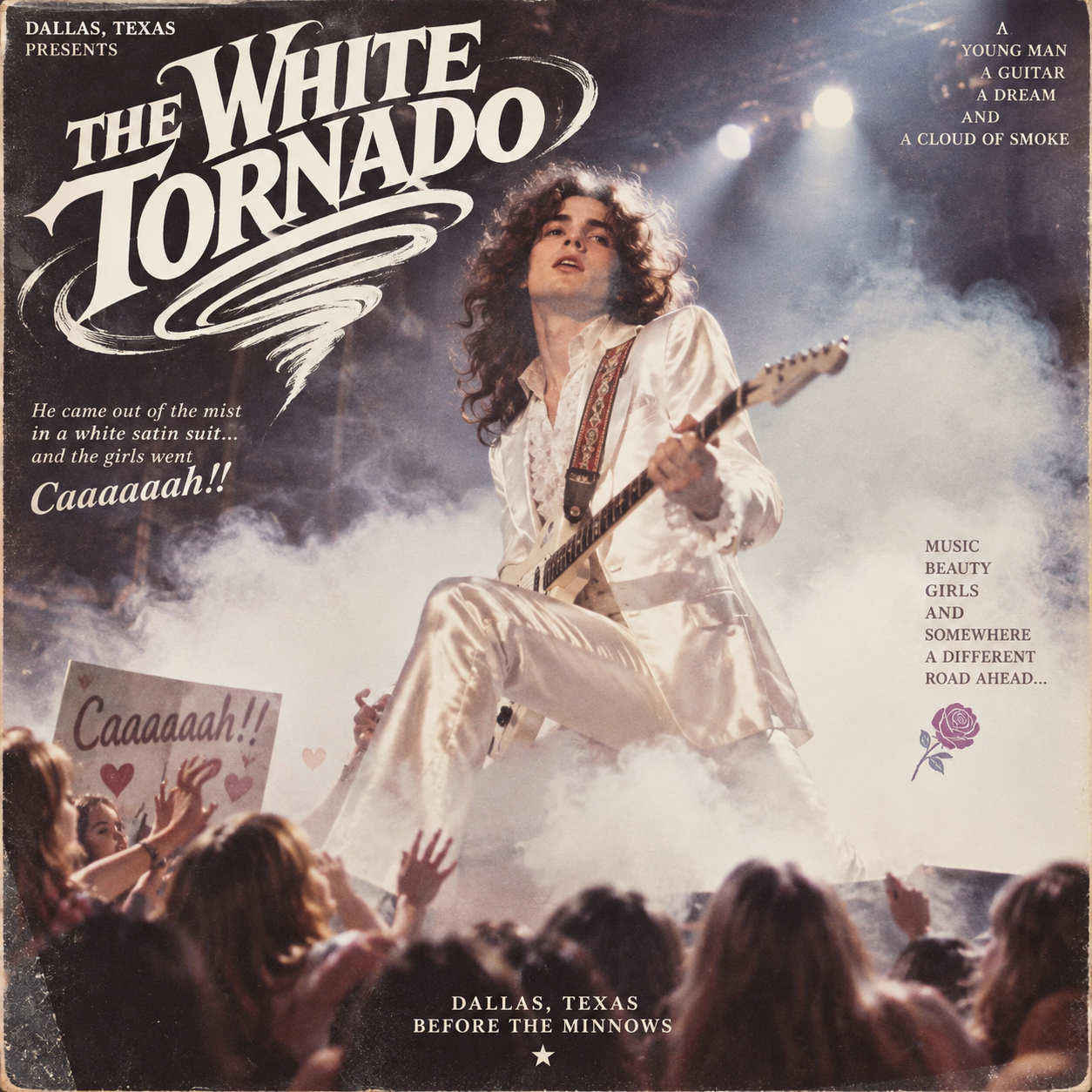
ところが16歳頃、友人の家でLightnin’ Hopkinsを聴いたあたりから、 White Tornado少年の耳が別の方向へ動き始める。
Bluesへ。
そしてLos Angelesへ。
Leon RussellとAsylum Choirを組み、そこからソロへ。
アイドルスターにならんとしたのも若気の至りだったのか、 Bennoはこの頃から、 いい音の鳴るほうへ嗅覚鋭く近づいてゆくようになる。
1971年にはThe Doorsの『L.A. Woman』。
Jim Morrison、Ray Manzarek、John Densmore、Robby Krieger。 そこへベースのJerry Scheffと、 リズムギターのMarc Bennoが加わった。
タイトル曲“L.A. Woman”では、 Bennoがリズムギターを受け持ったことで、 Robby Kriegerはブルージーなリードへ自由に動けたという。
つまり、主役の横に立って、 主役がもっと自由に鳴れる場所を作る。
この感じが、あとからBennoの道を追いかけていくと 妙に気になってくる。
そして同じ1971年、 Marc Bennoは『Minnows』を発表する。
Jesse Ed Davis、Clarence White、Bobby Womack、 Carl Radle、Jerry Scheff、Jim Keltner。
Rita Coolidge、Clydie King、Venetta Fields。
名前だけ並べても、 その辺の湖に雑魚が泳いでます、というメンバーじゃない(笑)。
ところがアルバムのタイトルは、
Minnows。
小さな魚たち。雑魚。
しかも当時のA&Mは、 このアルバムの広告まで魚の話にしている。
レコードの表から裏、魚拓、宣伝まで、 ずっと魚がついてくる。
その後、Bennoの道には、 まだスターになる前の若いStevie Ray Vaughanまで現れる。
BennoはStevieのギターを聴き、 やがて彼をNightcrawlersへ迎えた。
バンドはA&Mで録音し、 Humble PieやJ. Geils Bandのツアーにも出た。
リムジンまでやってきて、 一瞬、Rock Starの世界が目の前に開く。
ところが録音した作品をA&Mへ持っていくと、 レーベル側が求めていたMarc Benno像とは違った。
Benno自身が前へ出て歌うより、 Doyle Bramhallの声やStevieのギターを前へ出した音。
それが、レコード会社から見れば 「Marc Bennoのレコード」に聞こえなかった。
なんともBennoらしい話にも見えてくる。
その後もRita Coolidgeのバンドを率いたり、 Lightnin’ Hopkinsのバンドでギターを弾いたり、 Eric Claptonと録音したり。
1979年には『Lost in Austin』。
AustinでLostなのかと思ったら、 これまた話はLondonまで飛んでいく。
Cross-Countryどころか、 とうとう海を越えた(笑)。
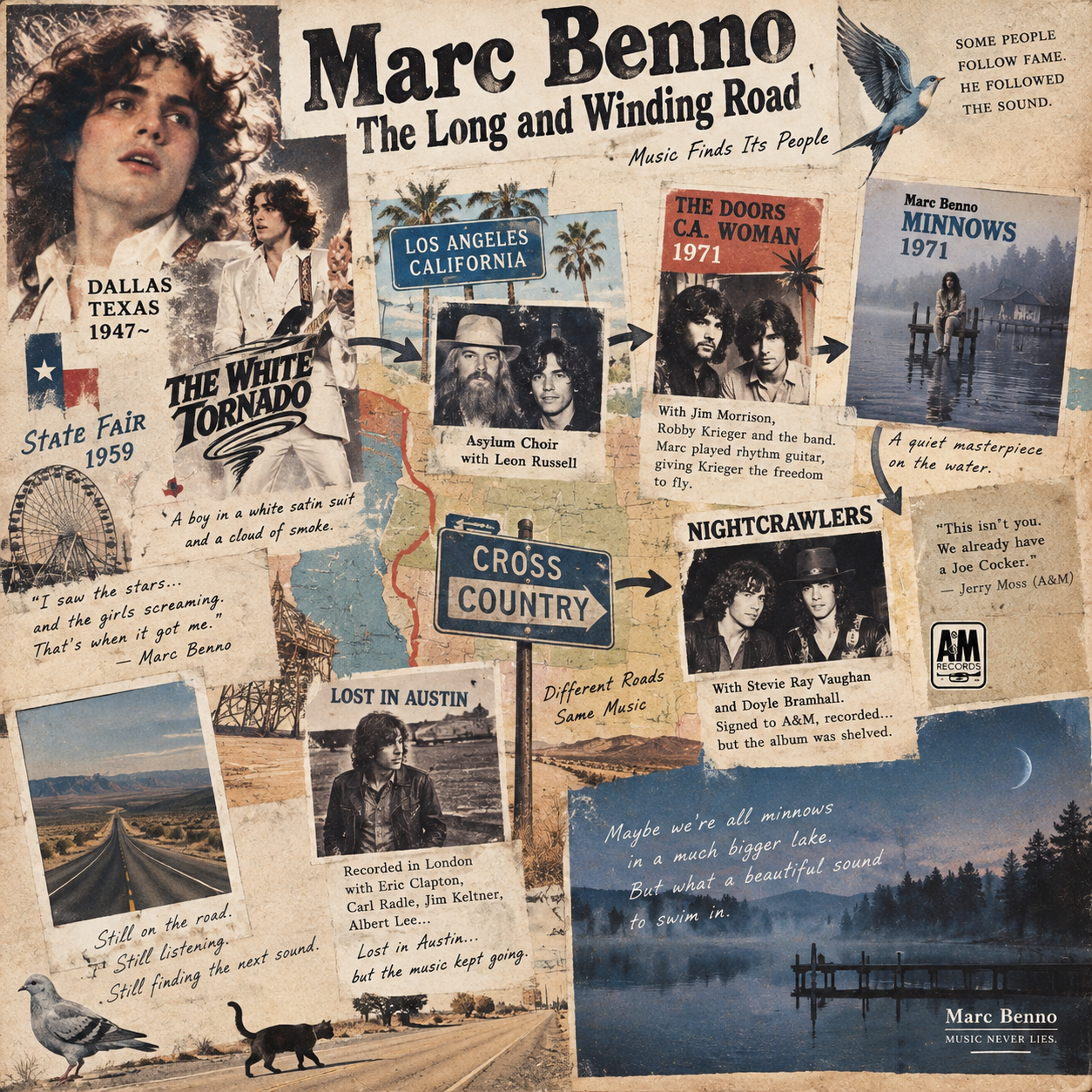
梅ちゃん日記・イメージマップ
こうしてMarc Bennoの道を辿っていると、 最初は笑えてくる。
Leon Russellのところにもいる。
Jim Morrisonのところにもいる。
Stevieがまだ若造の頃にもいる。
Claptonたちとも音を鳴らしている。
なんでこの人、こんなところにいちいち居るんだ。
と思う。
でも、ずっと追いかけていたら、 途中で見え方が変わってきた。
もしかしたら逆なんじゃないか。
有名な人のところへ行っていたんじゃない。
いい音のするところへ行っていたんじゃないか。
まだスターでも何でもないStevieのギターを聴いて、 面白いと思った。
『L.A. Woman』では自分が、 もう一本のギターとしてそこにいることで、 Robby Kriegerのギターを自由にした。
自分がスターになるよりも、
スターをよりスターたらしめんとすることに 喜びを感じていた人。
誰が出るとか出ないとかよりも、 良い音楽を前に出すこと。
音そのものをスターにすることにこそ、 価値や素晴らしさを見出した人。
そんなふうに見えてきた。
もう一度、『Minnows』をひっくり返す。
裏ジャケはといえば、 Marc Bennoの繊細なメロディと歌声が青く溶けだした、 深い湖の底。
水草のあいだを泳ぐ、小さな魚たち。
Minnows──雑魚。
自分が雑魚なのか。
それとも、Leon RussellもJim MorrisonもStevieもClaptonも、 あの大きな空と水の中に置いてしまえば、 みんな一匹の小さな魚なのか。
誰がスターなのかより、 何が鳴っているのか。
大物になることより、 小さなものの中にある価値を見つけること。
Marc Bennoが『Minnows』というタイトルに そんな意味を込めたのかどうかは知らない。
これは、私がこのレコードを眺めながら 勝手に詠んだ話。
緑色の水の底から、
ふたたび、表ジャケの湖面へ戻る。
白いサテンの衣装で、霧の中から現れて、
女の子に「キャーッ!」と言われたかった少年が、
大きな空と、湖いっぱいに立ちこめた霧の中で、
独り静かに座っている。
Marc Benno『Minnows』|1971
ENGLISH EDITION
Marc Benno “Minnows” — A Beautiful Stranger by the Lake
Lately we seem to have been wandering all over America — Georgia, Tennessee, California, and back again.
After drinking Budweiser with Elvin Bishop’s pigs and rattling along on J.J. Cale’s train, I was beginning to feel pleasantly drunk on that laid-back beat.
Maybe it was time for a little change of scenery on this Cross-Country journey….
Then a great lake appeared beyond the train window, so I decided to get off.
Peering through the haze, I could make out an old wooden building by the water, a deck stretching out over the surface, and at the far end of it, a beautiful young man sitting alone.
A slender face. A straight, fine nose. Enormous eyes. Long curls.
A young Marc Benno.
With those delicate features, he looks like someone who wandered out of The Rose of Versailles — the flamboyantly romantic Japanese manga famously adapted by the all-female Takarazuka Revue — and somehow got lost in Texas. 🌹
Marc Benno, Minnows.
The whole album seems to belong to the world of water and fish: a misty waterside scene on the front, aquatic plants and tiny fish on the back, even a gyotaku fish print inside — and A&M’s advertising campaign joined in with fish jokes of its own.
Water and fish, all the way through.
Then you look at the credits.
Jesse Ed Davis, Clarence White, Bobby Womack, Carl Radle, Jim Keltner, Rita Coolidge….
In other words, half the formidable characters we have already met wandering along this Cross-Country road seem to have gathered at the lake.
So I wanted to know what kind of musical life belonged to this beautiful young man sitting so quietly by the water.
Marc Benno was born in Dallas in 1947.
In 1959, as a boy, he found himself backstage at the Texas State Fair, watching stars — and watching girls scream for them.
By his own account, that was when the show-business bug bit him for good.
The boy started playing in bands, and eventually had a custom-made white satin suit made for himself and adopted a name:
White Tornado.
And then he filled the stage with fog.
Out of the mist he would leap in white satin, drop to his knees near the edge of the stage and sing to the audience —
and the girls would scream.
…Good grief. He really was straight out of The Rose of Versailles. 🌹
The trouble is, this comes from Benno’s own recollection.(笑)
But around sixteen, after hearing Lightnin’ Hopkins at a friend’s house, the White Tornado boy’s ears began turning in another direction.
Blues.
And then Los Angeles.
He formed the Asylum Choir with Leon Russell, and from there moved into a solo career.
Maybe wanting to become an idol was simply one of youth’s grand ideas. From around this point, Benno seems to develop an increasingly sharp instinct for wherever the good sound is coming from.
In 1971, that instinct took him into The Doors’ L.A. Woman.
Jim Morrison, Ray Manzarek, John Densmore, Robby Krieger — joined by Jerry Scheff on bass and Marc Benno on rhythm guitar.
On the title track, “L.A. Woman,” Benno’s rhythm guitar gave Robby Krieger more freedom to move into those bluesy lead lines.
In other words, he stood beside the star and made room for the star to sound even freer.
The farther I followed Benno’s road, the more that small detail began to stay with me.
And in that same year, 1971, Marc Benno released Minnows.
Jesse Ed Davis, Clarence White, Bobby Womack, Carl Radle, Jerry Scheff, Jim Keltner.
Rita Coolidge, Clydie King, Venetta Fields.
Just reading those names, this is hardly a pond full of insignificant little fish.(笑)
And yet the album is called:
Minnows.
Little fish. Small fry.
A&M even turned the album’s advertising into a fish story.
From the front cover to the back, from the gyotaku print to the promotion, the fish keep following you.
And farther down Benno’s road, another young man appears — Stevie Ray Vaughan, before he was a star.
Benno heard Stevie play and eventually brought him into the Nightcrawlers.
The band recorded for A&M and went out on the road with Humble Pie and the J. Geils Band.
There were even limousines. For a moment, the world of the Rock Star opened right in front of them.
But when the recordings were taken to A&M, they did not sound like the Marc Benno the label thought it wanted.
Instead of pushing himself forward as the singer, Benno had brought Doyle Bramhall’s voice and Stevie’s guitar to the front of the sound.
From the record company’s point of view, it no longer sounded enough like a “Marc Benno record.”
Somehow, that begins to feel very Marc Benno.
Later he would lead Rita Coolidge’s band, play guitar with Lightnin’ Hopkins, record with Eric Clapton, and keep moving.
Then, in 1979, came Lost in Austin.
You would think that if he was “Lost in Austin,” at least the story would stay in Austin. Instead, it flies all the way to London.
Cross-Country has now crossed the ocean.(笑)
Following Marc Benno’s road like this is funny at first.
He is there with Leon Russell.
He is there with Jim Morrison.
He is there when Stevie is still just a young kid.
He is making music with Clapton and the rest of them.
Why does this man keep turning up everywhere?
That was my first thought.
But after following him for a while, the picture began to change.
What if it was the other way around?
Maybe he was not going wherever the famous people were.
Maybe he was going wherever the good sound was.
He heard Stevie’s guitar before Stevie was a star and thought: this is interesting.
On L.A. Woman, simply by being there as the other guitar, he gave Robby Krieger’s guitar room to move.
Rather than becoming the star himself, perhaps he found joy in helping stars become even more fully themselves.
Less concerned with who was featured and who was not, and more concerned with bringing the good music forward.
A man who seems to have found value — and beauty — in making the sound itself the star.
That is how he began to look to me.
So I turn Minnows over once more.
On the back cover, Marc Benno’s delicate melodies and singing seem to dissolve into blue: the deep bottom of a lake.
Tiny fish swim between the water plants.
Minnows — small fry.
Is Benno the minnow?
Or, placed beneath that enormous sky and inside all that water, do Leon Russell, Jim Morrison, Stevie and Clapton become little fish too?
Less about who the star is, and more about what is sounding.
Less about becoming something big, and more about recognizing the value inside something small.
I have no idea whether Marc Benno meant anything like this when he called the album Minnows.
This is simply the story I found myself reading into the record as I looked at it.
From the green water at the bottom,
I rise once more to the lake on the front cover.
The boy who once appeared through the fog in white satin,
wanting to hear the girls scream for him,
is now sitting quietly alone,
beneath an enormous sky and a lake filled with mist.
Marc Benno “Minnows” | 1971
📀 More stories from
Rock Memoir 🍑 Ume-chan Diary
Return to the Rock Memoir INDEX →